
Which Welding Method Is Best for Aluminium?
Aluminium doesn’t weld like steel. It conducts heat fast, forms an oxide layer the moment it’s exposed to air, and warps easily if the process isn’t controlled. Choosing the wrong welding method doesn’t just slow a job down, it can compromise the strength of the finished piece.
This guide breaks down the three main welding methods used on aluminium, where each one fits, and which method we use on aluminium trailers, toolboxes, and structural work.
Why Aluminium Welding Is Different From Steel
- High thermal conductivity: aluminium pulls heat away from the weld pool fast, so more heat input is needed without burning through thin sections.
- Oxide layer: aluminium forms an oxide skin instantly on contact with air, and that oxide melts at a much higher temperature than the base metal. It has to be removed or actively broken down during welding.
- No visible color change before melting: unlike steel, aluminium doesn’t glow red before it reaches melting point, which makes heat control a matter of experience, not visual cues.
- Higher risk of warping: aluminium’s thermal expansion rate is roughly double that of steel, so fixturing and heat sequencing matter more.
The 3 Welding Methods for Aluminium
TIG Welding (Tungsten Inert Gas)
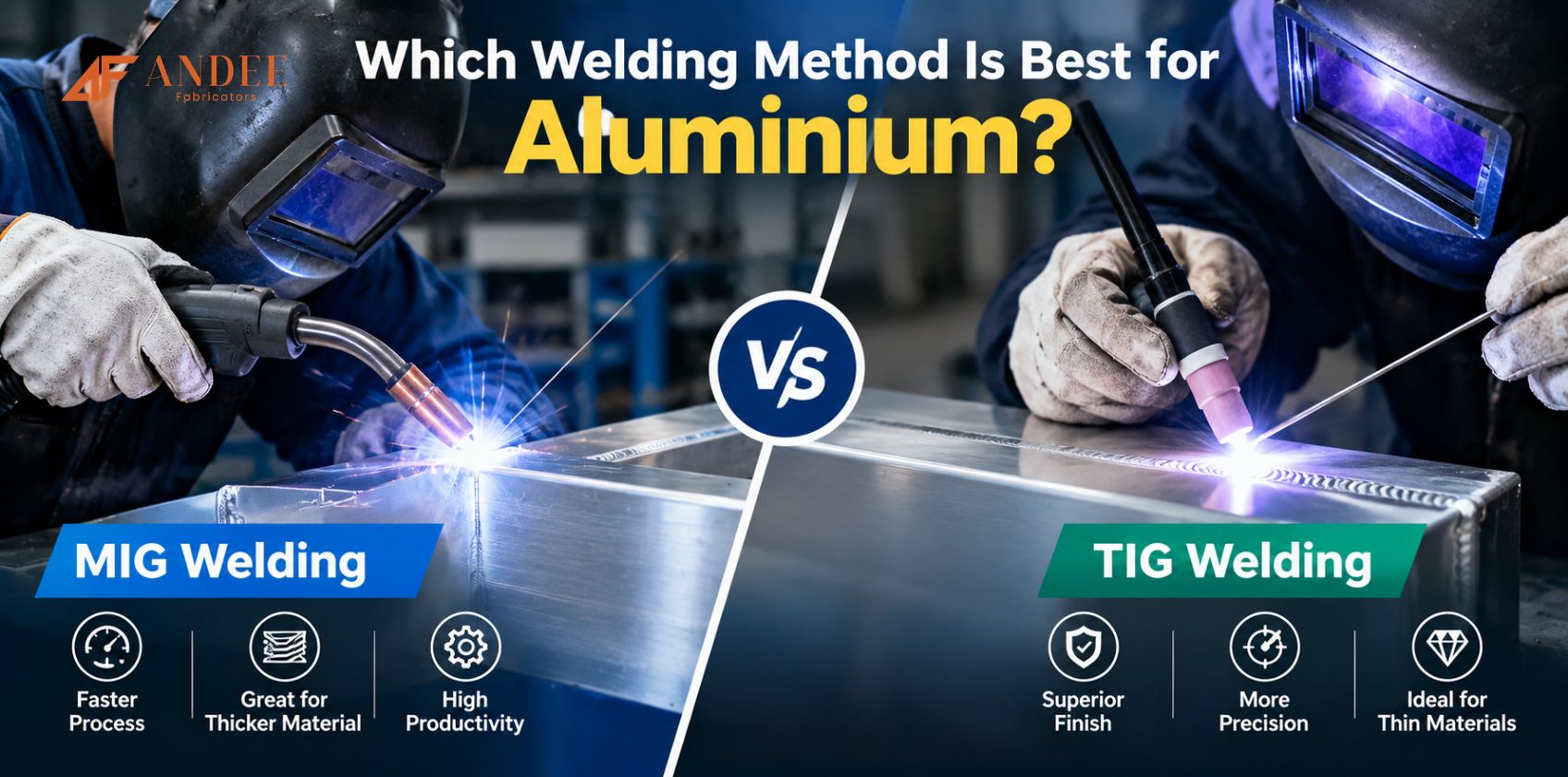
TIG uses a non-consumable tungsten electrode and a separate filler rod, with an inert gas (typically argon) shielding the weld pool. The welder controls heat input directly through a foot pedal or torch amperage control.
Best for: precision work, thinner gauges, visible welds, and anything where finish quality matters as much as strength — toolboxes, brackets, panel work, and detailed structural joins.
Trade-off: slower than MIG, and more operator skill is required to get a clean, consistent bead.
MIG Welding (Metal Inert Gas)
MIG feeds a continuous aluminium wire electrode through the gun, shielded by inert gas. It’s a faster process that suits thicker material and longer weld runs.
Best for: larger structural sections, thicker aluminium plate, and production runs where speed matters without sacrificing weld integrity — chassis rails, heavier trailer frames, and structural fabrication.
Trade-off: less precise than TIG on thin material, and the weld bead is generally less refined in appearance.
Stick Welding (SMAW)
Stick welding on aluminium uses a flux-coated aluminium electrode and is far less common than TIG or MIG. It doesn’t require shielding gas, which makes it usable outdoors or on-site, but it’s harder to control and produces a rougher finish.
Best for: emergency field repairs where gas-shielded equipment isn’t practical.
Trade-off: not suited to precision fabrication or any weld where finish and consistency matter.
TIG vs MIG vs Stick: Quick Comparison
| Method | Speed | Precision | Best Material Thickness | Typical Use |
|---|---|---|---|---|
| TIG | Slower | Highest | Thin to medium gauge | Toolboxes, panels, visible welds |
| MIG | Faster | Medium | Medium to thick | Trailer frames, structural sections |
| Stick | Moderate | Lowest | Thick, rough sections | Field/emergency repairs only |
Which Method Does Andee Fabricators Use?
We use a combination of TIG and MIG welding across our aluminium work, matched to the job rather than defaulting to one method.
- TIG is our standard for aluminium toolboxes, panel work, and any structural join where the weld will be visible or the material is thinner gauge.
- MIG is used for heavier aluminium trailer chassis and structural sections where speed and weld volume matter without compromising strength.
Every weld is completed to Australian standards, with heat input and filler selection matched to the specific aluminium grade being used.
Common Mistakes in Aluminium Welding
- Using the wrong shielding gas mix. Pure argon suits most aluminium TIG and MIG work; getting this wrong affects arc stability and weld cleanliness.
- Skipping oxide removal before welding. The oxide layer has to be cleaned or broken down, not just melted through.
- Underestimating heat input, then compensating too late and warping the material.
- Using steel filler wire or settings on aluminium. Aluminium requires its own filler alloy matched to the base metal.
- Choosing stick welding for anything beyond a field repair. It’s not built for precision aluminium fabrication.
Aluminium Welding FAQ
Is TIG or MIG better for aluminium?
Neither is universally better. TIG gives more precision and a cleaner finish, suited to thinner material and visible welds. MIG is faster and suited to thicker, structural sections. The right choice depends on the material thickness and the finish required.
Can aluminium be stick welded?
Yes, but it’s uncommon and generally limited to field or emergency repairs where gas-shielded equipment isn’t available. It’s not recommended for precision fabrication work.
Why does aluminium welding require more skill than steel?
Aluminium doesn’t change color before melting, conducts heat away from the weld pool quickly, and forms an oxide layer that has to be managed. These factors make heat control far less forgiving than with steel.
What causes aluminium to warp during welding?
Aluminium expands at roughly double the rate of steel when heated. Without proper fixturing and heat sequencing, this expansion and contraction causes warping, especially on thinner sections.
What welding method is used for aluminium trailers?
Structural sections and chassis rails are typically MIG welded for speed and strength on thicker material, while panels, toolboxes, and visible joins are TIG welded for precision and finish.
Need Aluminium Fabrication Done Right?
Andee Fabricators delivers custom aluminium fabrication, aluminium trailer manufacturing, and aluminium toolboxes built to Australian standards from our Sydney workshop. Get in touch to discuss your project.